27 Years of UnderArmour.com: Every Change From Basement Startup to $5B Brand
We tracked every Wayback Machine snapshot of underarmour.com from 1998 to 2025 — 12,498 captures across 3 major platform migrations. See how Kevin Plank's basement startup iterated its way to a global athletic powerhouse.
Why Track How Brands Rebuild Their Websites?
Under Armour is one of the longest-running ecommerce case studies in athletic apparel. With 12,498 Wayback Machine snapshots spanning 27 years, their homepage tells the story of a brand that went from Kevin Plank selling moisture-wicking shirts out of his grandmother's basement to a $5 billion global athletic empire — and the platform decisions that made each stage possible:
Under Armour has 12,498 archived snapshots on the Wayback Machine — one of the densest archives in athletic apparel. That's an average of 475 captures per year since 1998, giving us an almost daily view of how their homepage evolved through IPO, connected fitness pivots, and three complete platform migrations.
Under Armour spent $475 million acquiring MyFitnessPal in 2015 — a bet on connected fitness that reshaped their entire homepage strategy for four years. The homepage became a gateway to an ecosystem of fitness apps. When that strategy pivoted, they sold MyFitnessPal for $345 million in 2020 — a $130 million lesson in platform focus.
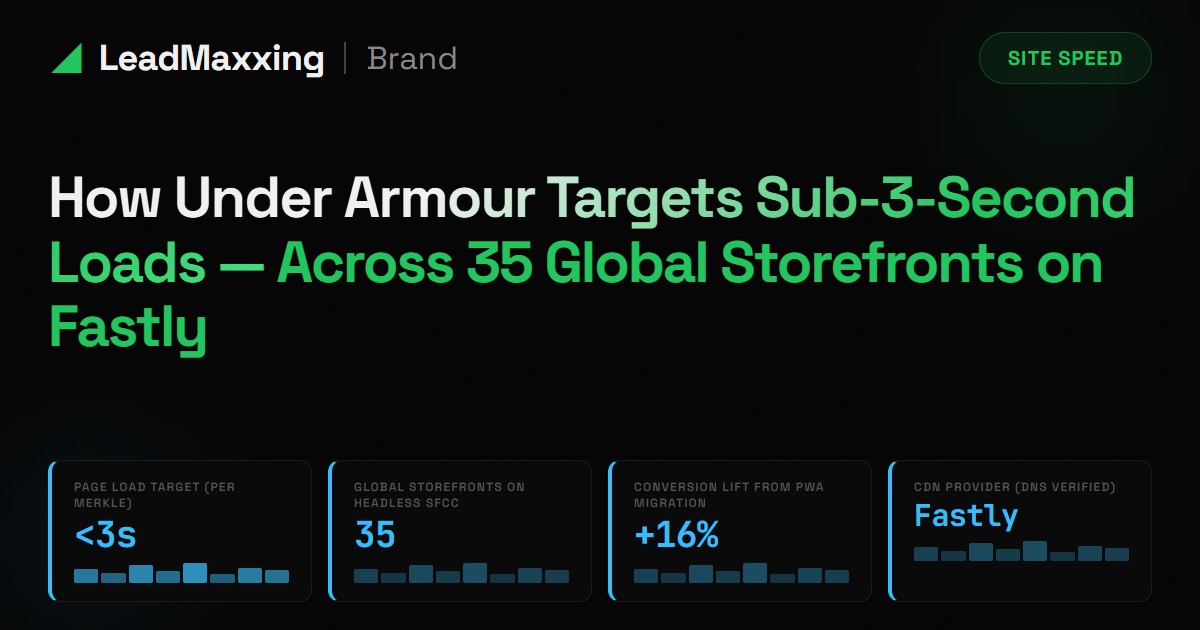
Under Armour achieved at least a 4x speed improvement across all page types when they migrated to a headless Next.js frontend in 2023. Some key pages saw more than 10x year-over-year speed gains. The migration to headless SFCC was driven by their goal to consistently hit sub-three-second load times globally.
Three Platform Migrations
How Under Armour outgrew three platforms in 27 years
Under Armour's homepage evolution mirrors its business strategy shifts. Each platform migration was triggered by a ceiling the previous system couldn't break through. Their tech stack grew from a Flash-based brochure to a headless SFCC architecture spanning 35 global storefronts.
- StackCustom / Flash
- FocusBrand awareness
- StrategyProduct catalog
- StackCustom-built
- ShiftDTC ecommerce
- StrategyConnected fitness
- StackSFCC + Next.js
- Storefronts35 global
- StrategyPerformance DTC
The Full Timeline
Every major homepage change from 1998 to 2025
Key Findings
- → Under Armour has 12,498 Wayback Machine snapshots spanning 27 years (1998–2025), making it one of the most densely archived athletic apparel sites online.
- → The $475 million MyFitnessPal acquisition in 2015 reshaped Under Armour's homepage strategy for four years before being divested for $345 million in 2020 — a $130 million lesson in platform focus.
- → Under Armour's 2023 migration to headless SFCC + Next.js achieved at least a 4x speed improvement across all page types, with some pages seeing 10x gains (Merkle case study).
- → The peak of homepage activity was 2016 with 2,132 Wayback captures — coinciding with Under Armour's revenue peak and connected fitness push.
- → Under Armour now operates 35 global storefronts on a single Salesforce Commerce Cloud instance — one of the largest SFCC deployments in athletic apparel.
What This Data Means for You
Turning Under Armour's evolution into your competitive advantage
Under Armour's 27-year homepage archive is a masterclass in how brand strategy shows up on the homepage. When they bet on connected fitness, the homepage became an app ecosystem gateway. When they pivoted back to performance, the homepage stripped down to athlete imagery and product. Every strategic shift was visible months before it showed up in earnings calls. Tools like LeadMaxxing let you track these competitor homepage shifts automatically — scraping layouts, extracting patterns, and running autonomous A/B tests on your own pages. Their SEO and content strategy and tracking infrastructure tell the rest of the story.
LeadMaxxing Automates This Entire Playbook
Under Armour spent years and millions rebuilding their homepage to hit sub-three-second load times and optimize conversion. LeadMaxxing captures every visitor interaction — page views, scroll depth, click paths — then generates landing page variants and runs A/B tests automatically. Winners auto-apply at 95% statistical significance. What took Under Armour an engineering team and Merkle partnership, LeadMaxxing does for $29/month.
Try autonomous A/B testing →5 Things You Can Implement Today
Actionable lessons from Under Armour's homepage playbook
Let brand strategy drive homepage structure, not templates
Under Armour's homepage changed dramatically when their strategy shifted from connected fitness to pure performance. Your homepage should reflect your current positioning, not last year's. LeadMaxxing auto-generates page variants aligned to your brand messaging — swap hero imagery, CTAs, and featured products without touching code.
Go headless before speed becomes a bottleneck
Under Armour waited until 2023 to go headless and saw 4x speed gains. If your site takes more than 3 seconds to load, you're losing revenue. LeadMaxxing monitors your site performance and flags infrastructure bottlenecks before they cost you conversions.
Track competitor homepage changes weekly
Under Armour's homepage shifts telegraphed their strategic pivots months before earnings calls. When competitors start changing their homepage weekly, something big is coming. LeadMaxxing tracks competitor page evolution automatically and alerts you to strategic shifts.
A/B test every homepage change, not just redesigns
Under Armour's 2,132 captures in 2016 suggest near-constant iteration during their peak growth year. LeadMaxxing runs autonomous A/B tests on every variant — winners auto-apply at 95% statistical significance.
Supercharge Your Leads with LeadMaxxing
Get a free LeadMaxxing account and start supercharging your leads. Start free →
Request a FREE Demo + Report
For Your Brand
Request a demo and we'll generate a full competitive analysis for YOUR brand. The same intelligence you just read — comparison with competitors, actionable strategies, and AI-powered recommendations.
More Under Armour Intelligence
Page History for Similar Brands
Frequently Asked Questions
What ecommerce platform does Under Armour use in 2026?
When was Under Armour founded and when did it go public?
How many times has Under Armour changed its ecommerce platform?
Why did Under Armour migrate to Salesforce Commerce Cloud?
What happened to Under Armour's MyFitnessPal acquisition?
How does Under Armour's website compare to Nike and Lululemon?
How often does Under Armour update their homepage?
What is Under Armour's annual revenue?
Sources & References
web.archive.org
merkle.com
about.underarmour.com
builtwith.com
en.wikipedia.org
mojotech.com