29 Years of Nike.com: Every Change From Brochure Site to $51B DTC Engine
We tracked every Wayback Machine snapshot of nike.com from 1997 to 2026 — 62,000+ captures showing how the world's largest sportswear brand rebuilt its digital storefront across five major platform eras.
Why Track How the World's Largest Sportswear Brand Rebuilds Its Website?
Nike.com is the most-visited sportswear website on the planet, and its 29-year archive is a masterclass in digital strategy at scale. Unlike DTC startups that replatform when they outgrow Shopify, Nike has navigated Flash-era splash pages, early ecommerce, mobile-first redesigns, and a headless commerce transformation — all while generating $51.4 billion in annual revenue (FY2024, per SEC filings). Their homepage evolution mirrors every major shift in ecommerce:
62,732
Nike.com has 62,732 Wayback Machine snapshots from 1997 to 2026 — averaging over 2,100 captures per year. That density of archival data makes Nike one of the most thoroughly documented website evolutions in ecommerce history.
Nike Direct (DTC) revenue exceeded $21 billion in FY2024. The shift from wholesale-first to direct-first wasn't just a strategy change — it required a complete homepage transformation. Nike rebuilt its digital storefront to support personalization, SNKRS drops, and Nike Member experiences that wholesale couldn't deliver.
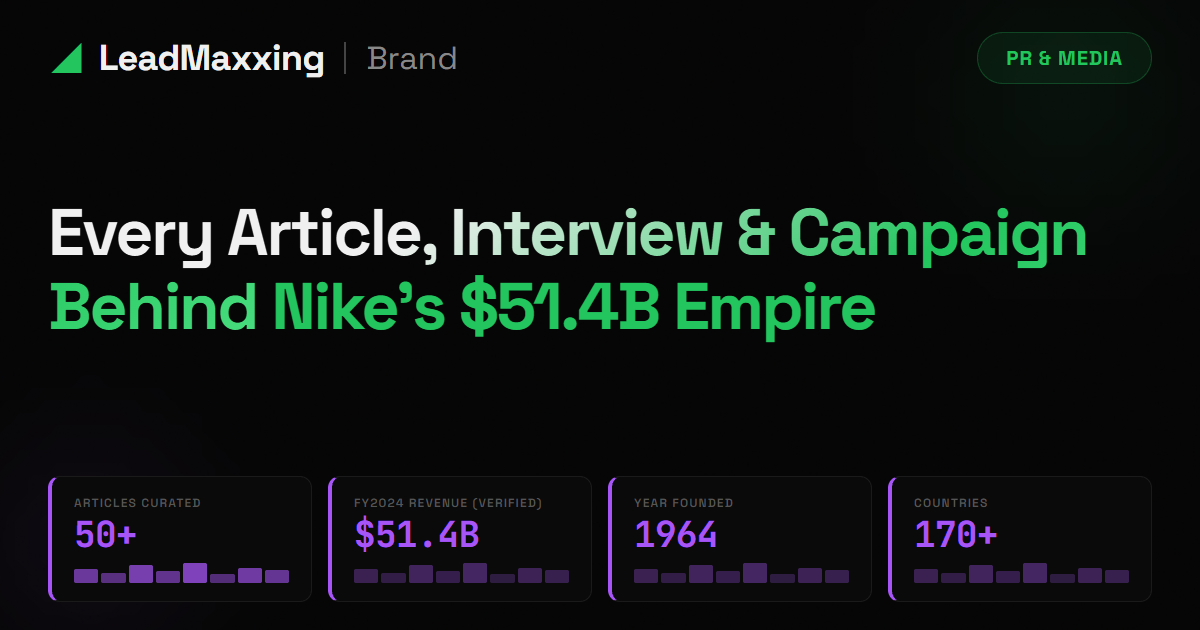
Nike's first Wayback Machine capture dates to April 1997 — making it one of the earliest Fortune 500 brands online. The original site had zero ecommerce: no shopping cart, no product pages. Nike waited until February 1999 to add online purchasing, proving that even for a $9B company (1997 revenue), brand presence came before transactions.
1997 — The beginning. Nike.com launches as a pure brand experience. No ecommerce, no product pages. Flash animations and brand storytelling only. Nike is already a $9B company but treats the web as a billboard, not a store.
How Nike's homepage evolved across 29 years and five distinct platform generations
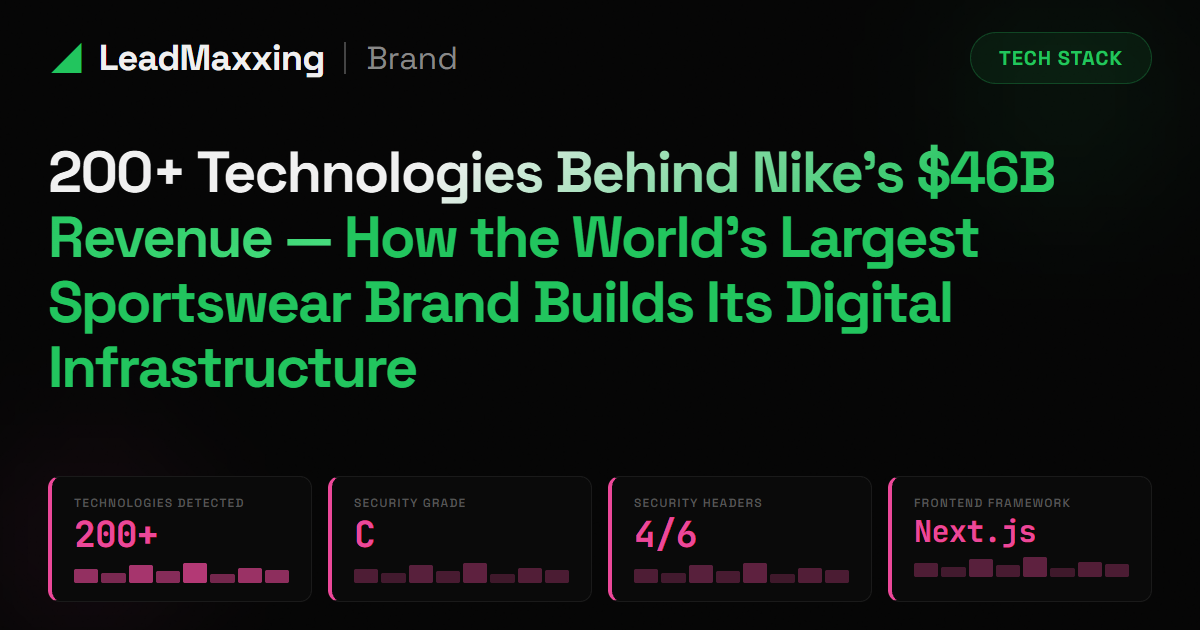
Most ecommerce brands go through 2–3 platform shifts in a decade. Nike has navigated five distinct platform eras across 29 years, each one driven by a fundamental change in how the company thinks about digital. Their tech stack today — custom React/Next.js on AWS with dual CDN — is the result of nearly three decades of iteration.
Brochure & Flash Era
$9B
1996–2005
StackStatic / Flash
EcommerceAdded 1999
StrategyBrand storytelling
Nike+ & Digital Push
$19B
2006–2016
StackCustom CMS
InnovationNike+, SNKRS
StrategyConnected fitness
DTC & Headless Commerce
$51.4B
2017–2026
StackReact / Next.js
CDNAkamai + CF
StrategyDTC-first
The Full Timeline
Every major homepage change from 1997 to 2026
1996-97
Nike.com launches as a brand-only website. No shopping cart, no product pages. Flash-heavy splash screens and brand storytelling. Nike is a $9B company but treats the web as a billboard. First Wayback Machine capture: April 18, 1997.
1999
Ecommerce arrives. Nike adds online purchasing to nike.com in February 1999. NIKEiD customization platform launches in November — one of the first mass-market product configurators online. Two sneaker models available for customization. Ecommerce launch
2000-05
Flash-heavy era. Homepage dominated by Flash animations, interactive experiences, and campaign microsites. Ecommerce exists but is secondary to brand experience. Nike treats the website as a media channel, not a store.
2006
Nike+ iPod partnership launches. Nike and Apple unveil the Nike+iPod Sport Kit (announced May 23, 2006). NikeStore.com gets its first major redesign since 1999. The homepage begins connecting physical products to digital experiences. Nike+ launch
2010-12
Mobile-first shift begins. Nike+ GPS running app launches. Nike FuelBand wearable ships in 2012. Homepage starts adapting for mobile traffic as smartphones reshape ecommerce. Flash content phases out in favor of responsive design.
2015
SNKRS app launches. Nike introduces the SNKRS app for limited-edition sneaker drops, changing how hype-driven commerce works. Homepage begins integrating social media content and athlete storytelling. SNKRS launch
2017
Consumer Direct Offense announced. June 15, 2017: Nike unveils its "Triple Double" strategy — 2X Innovation, 2X Speed, 2X Direct. Nike.com becomes the centerpiece of the entire company strategy. Homepage redesigned around personalization and direct sales. CDO strategy
2018-19
Headless commerce transformation. Nike migrates to a custom React/Next.js frontend on AWS. NIKEiD rebrands to "Nike By You." Homepage becomes personalized by member status, browsing history, and geography. Tracking infrastructure scales dramatically.
2020
Consumer Direct Acceleration. COVID accelerates Nike's DTC pivot. Nike begins cutting wholesale partners — dropping Zappos, DSW, Urban Outfitters, and others. Homepage becomes the primary revenue channel. Digital sales surge as stores close. CDA strategy
2022-23
Peak DTC — then course correction. Digital reaches 26% of total revenue. But customer acquisition costs rise without wholesale partners. Nike begins re-engaging some retailers. Homepage shifts toward Nike Member benefits, loyalty tiers, and exclusive pricing.
2024-26
Current state. Custom headless platform on AWS. Dual CDN (Akamai + CloudFront). React/Next.js frontend. $51.4B total revenue, $21B+ Nike Direct. The 1997 Flash brochure site is unrecognizable. See the full tech stack →
Key Findings
→ Nike.com has 62,732 Wayback Machine snapshots spanning 29 years (1997–2026), making it one of the most extensively archived ecommerce sites in history.
→ Nike waited 3 years after launching nike.com (1996) before adding ecommerce in February 1999, proving that even for a $9B company, brand presence came before transactions.
→ The 2017 Consumer Direct Offense triggered Nike's most significant homepage transformation, making nike.com the centerpiece of a company-wide strategy shift that grew Nike Direct to $21B+ by FY2024 (per SEC filings).
→ Nike runs a custom headless commerce platform on AWS with React/Next.js frontend and dual CDN (Akamai + CloudFront) — significantly more complex than competitors using off-the-shelf solutions like Shopify Plus or Salesforce Commerce Cloud.
→ Nike's DTC-first pivot in 2020 and subsequent partial reversal in 2023–2024 is visible in the homepage evolution, showing how digital strategy directly shapes site architecture.
What This Data Means for You
Turning Nike's evolution into your competitive advantage
Nike's 29-year homepage archive reveals a pattern: every major revenue milestone was preceded by a strategic homepage transformation. The 1999 ecommerce launch, the 2006 Nike+ integration, the 2017 Consumer Direct Offense, the 2020 DTC acceleration — each one reshaped how the homepage works. Their email and CRM strategy, SEO playbook, and advertising approach all follow the homepage's lead. What took Nike teams of engineers and designers to test and iterate, you can now automate.
◢
LeadMaxxing Automates This Entire Playbook
Nike rebuilt their homepage hundreds of times across 29 years with dedicated engineering teams. LeadMaxxing does the same thing autonomously: it tracks competitor homepage changes, generates landing page variants from your existing content, and runs A/B tests automatically. Winners auto-apply at 95% statistical significance. What took Nike a global engineering org, LeadMaxxing does for $29/month.
Nike spent 3 years on brand storytelling before adding ecommerce. Your homepage should establish trust before pushing products. LeadMaxxing auto-generates brand-forward landing pages that balance storytelling with conversion CTAs.
Personalize your homepage by visitor segment
Nike's Consumer Direct Offense made personalization the homepage's core function — different visitors see different content based on membership, history, and geography. LeadMaxxing does this automatically with behavioral targeting and dynamic page variants.
Treat your homepage as a testing surface, not a static page
Nike's 62,000+ snapshots prove they never stop iterating. If your hero section has been the same for 30+ days, you're leaving data on the table. LeadMaxxing runs autonomous A/B tests on every variant — winners auto-apply at 95% significance.
Monitor competitor homepage changes in real time
When Nike shifts their homepage strategy, every sportswear brand should notice. LeadMaxxing tracks competitor page evolution automatically — scraping layouts, extracting patterns, and alerting you to strategic shifts before they impact your market share.
Supercharge Your Leads with LeadMaxxing
Get a free LeadMaxxing account and start supercharging your leads. Start free →
Free Demo
Request a FREE Demo + Report For Your Brand
Request a demo and we'll generate a full competitive analysis for YOUR brand. The same intelligence you just read — comparison with competitors, actionable strategies, and AI-powered recommendations.
✓ Auto-generated brand report✓ Competitor comparison✓ Strategy recommendations✓ AI-powered insights✓ Personalized walkthrough of LeadMaxxing on your data
We'll follow up within 24 hours with your personalized report.
What platform does Nike use for their website in 2026?
As of 2026, Nike runs a custom-built headless commerce platform on AWS. The frontend uses React and Next.js, served via dual CDN (Akamai and Amazon CloudFront). Shopify and Salesforce Commerce Cloud are not used for the main nike.com storefront. Nike built its own microservices architecture using NoSQL databases, serverless functions, and GraphQL APIs.
When did Nike.com first launch?
Nike.com first launched in August 1996 as an informational-only website with no ecommerce capabilities. The site logged 14 million visitors by 1998 despite zero advertising spend driving traffic. Nike added ecommerce functionality in February 1999, allowing customers to purchase directly online for the first time.
How many times has Nike redesigned their homepage?
Based on Wayback Machine data spanning 29 years and 62,000+ snapshots, Nike has gone through at least 5 major homepage redesigns: the 1996 Flash-era launch, the 1999 ecommerce addition, the 2006 NikeStore.com overhaul, the 2017 Consumer Direct Offense redesign prioritizing DTC, and the 2020 headless commerce rebuild during Consumer Direct Acceleration.
What was Nike's Consumer Direct Offense strategy?
Announced in June 2017, the Consumer Direct Offense was Nike's strategic pivot to prioritize direct-to-consumer sales. It included the “Triple Double” approach: 2X Innovation, 2X Speed, 2X Direct connections with consumers. Nike.com became the centerpiece, leading to wholesale partner cuts and a homepage redesign focused on personalization, the SNKRS app, and Nike Member experiences.
How much revenue does Nike generate from digital sales?
Nike Direct (DTC) revenue exceeded $21 billion in FY2024 (ended May 2024), per Nike's SEC filings. Digital sales accounted for approximately 26% of total revenue. Nike's total revenue was $51.4 billion in FY2024. The digital channel grew at roughly a 26% CAGR from FY2019 through FY2023.
What is NIKEiD and when did it launch?
NIKEiD launched in November 1999 as one of the earliest mass-market product customization platforms online. Initially built by Red Sky Interactive, it offered just two sneaker models for customization via a JavaScript-based configurator. Nike rebranded it to “Nike By You” in 2018. The platform became a key differentiator for nike.com and a driver of direct sales.
Why did Nike cut wholesale partners to focus on DTC?
Starting in 2020 under the Consumer Direct Acceleration strategy, Nike dropped retailers like Zappos, Dillard's, DSW, and Urban Outfitters to prioritize direct channels where they controlled the brand experience and captured higher margins. By 2023–2024, Nike partially reversed course, re-engaging some wholesale partners after the DTC-only approach showed limitations in customer acquisition reach.
How does Nike's website technology compare to other sportswear brands?
Nike's tech stack is significantly more complex than most competitors. While brands like Under Armour and Lululemon typically use off-the-shelf platforms (Salesforce Commerce Cloud, Shopify Plus), Nike built a fully custom headless commerce platform on AWS with React/Next.js frontend, dual CDN (Akamai + CloudFront), and proprietary microservices. Their infrastructure handles peak traffic from global launches like SNKRS drops.
Sources & References
Wayback Machine / Internet Archive — 62,732 archived snapshots of nike.com from 1997 to 2026, used to reconstruct the full homepage evolution timeline.
web.archive.org
Nike FY2024 Investor Results — Official Nike investor relations press release confirming $51.4B total revenue and Nike Direct revenue figures for fiscal year 2024.
investors.nike.com
Nike Consumer Direct Offense Announcement (2017) — Official Nike investor news detailing the "Triple Double" DTC strategy that reshaped nike.com.
investors.nike.com
E-Commerce Times — Nike Runs With E-Commerce (1999) — Coverage of Nike's 1999 ecommerce launch, including early traffic statistics and strategy context.
ecommercetimes.com
Nike SEC 10-K Filing (FY2024) — Annual SEC filing with audited financial data, digital revenue breakdowns, and business strategy details.
sec.gov
Apple Newsroom — Nike+iPod Launch (2006) — Official Apple press release announcing the Nike and Apple partnership and Nike+iPod Sport Kit.
apple.com
WebTechSurvey — Nike.com Technology Profile — Technology detection data for nike.com including React, Next.js, Akamai, AWS, and monitoring tools.
webtechsurvey.com
Compiled by LeadMaxxing using Wayback Machine data. We track how brands build, test, and optimize their marketing.