Nike's Pricing Strategy: How the $51B Giant Positions Against Adidas, Lululemon, and Gymshark
We mapped Nike's product catalog against Adidas, Lululemon, Under Armour, and Gymshark — category breakdowns, discount patterns, the DTC pivot, and why they raised prices on 3,300+ SKUs in 2025.
First: Why Should You Care About Pricing Intelligence?
Nike just executed the most dramatic pricing pivot in sportswear — and every DTC brand should be watching
Because the world's biggest sportswear company just proved that pricing strategy can make or break a $51 billion brand. Nike's FY2025 revenue fell nearly 10% to $46.3 billion — the sharpest annual decline in recent history — driven in part by over-discounting that diluted their premium positioning. Now, under CEO Elliott Hill, they're raising prices, pulling back from aggressive DTC, and reinvesting in wholesale partners. It's a masterclass in what happens when pricing strategy goes wrong and how to course-correct.
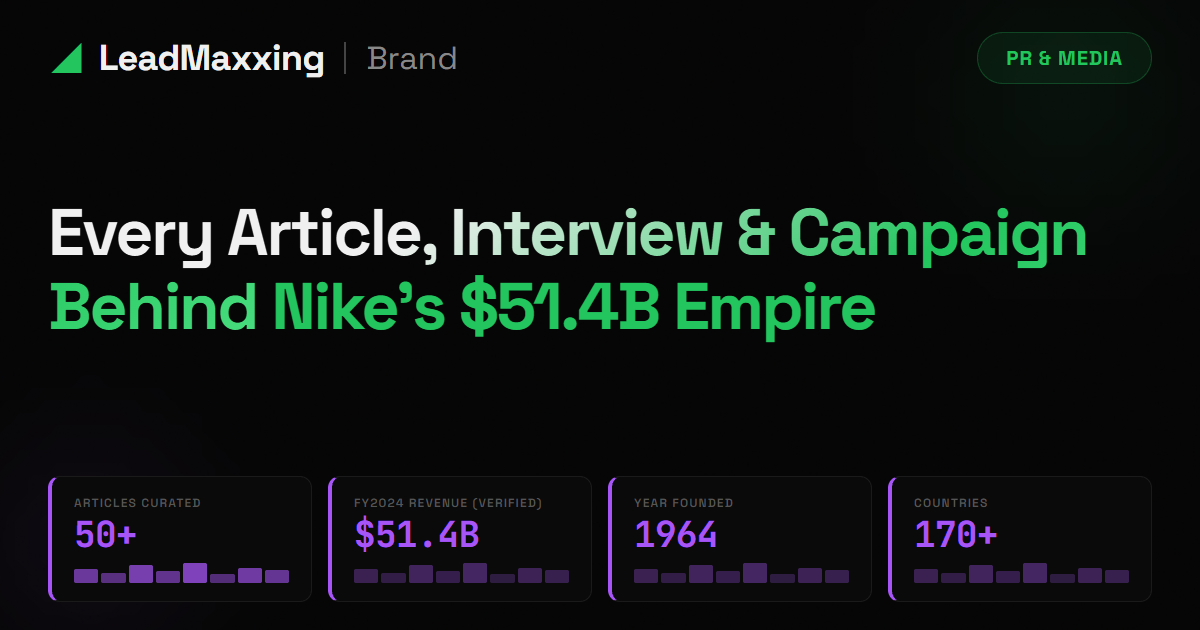
Nike generated $51.4 billion in FY2024 revenue (verified fact). That's more than Adidas, Under Armour, Lululemon, and Gymshark combined. But FY2025 saw a nearly 10% decline to $46.3 billion, driven by heavy discounting that eroded brand perception and a digital-first ad strategy that over-indexed on performance marketing at the expense of brand building.
Nike raised apparel prices an average of 14% between September 2024 and September 2025. Footwear priced above $150 increased up to $10 per pair. This was part of CEO Elliott Hill's turnaround plan combined with tariff-driven adjustments — a signal that Nike is pivoting away from discounting toward full-price premium positioning.
Nike's FY2025 revenue dropped nearly 10% year-over-year to $46.3 billion. The decline was driven by over-reliance on DTC discounting, reduced wholesale shelf space, and consecutive quarterly drops exceeding 20% in digital sales. Nike announced a $2 billion cost-savings plan in December 2024, acknowledging that the aggressive DTC pivot had added complexity without commensurate returns.
Nike
Adidas
Lululemon
Gymshark
Price Range Analysis
How Nike spans $20 sports bras to $295 carbon-plate racers — and where the volume lives
Nike's pricing range is the widest of any major sportswear brand. From a $20 entry-level sports bra to the $295 Alphafly 3 elite racing shoe, Nike covers more price territory than any competitor. But the volume lives in the middle: most apparel clusters between $50 and $120, and the most popular running shoe — the Pegasus — sits at $145.
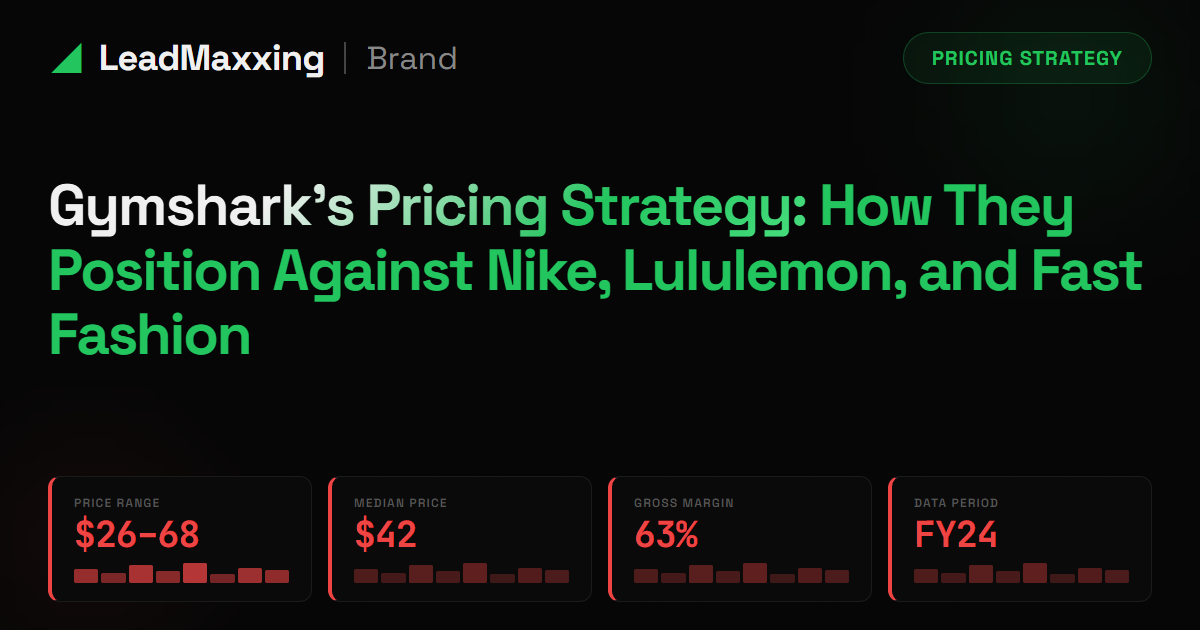
Compare that to Gymshark, where the entire catalog sits between $26 and $68. Or Lululemon, where leggings start at $88. Nike's wide range is both a strength and a vulnerability: it lets them compete at every price tier, but it also makes brand positioning more complex. When you sell a $20 sports bra and a $295 racing shoe, what does "Nike" actually signal?
We estimate these distributions based on nike.com product page analysis, March 2026. Percentages represent approximate share of apparel + footwear SKUs per band.
Nike's $50–$120 band contains the majority of their apparel catalog. This "mass premium" sweet spot sits above Gymshark ($26–$68) and below Lululemon ($88–$128). The wide spread lets Nike compete at multiple tiers simultaneously — but it also means their brand signals differently depending on which product you're looking at.
This is exactly the kind of pricing intelligence LeadMaxxing generates automatically. Our AI scrapes competitor catalogs, maps price bands, and flags when competitors adjust strategy — see how it works →
Category Breakdown
Running shoes, lifestyle sneakers, apparel, and outerwear mapped by price
Running shoes are the crown jewel. Nike's performance running line spans from the $75 Revolution 8 to the $295 Alphafly 3, with the Pegasus franchise anchoring at $145 as the perennial best-seller. Lifestyle sneakers like the Air Force 1 ($115) and Dunk Low ($115) hold cultural cachet while sitting below the performance ceiling.
| Category | Price Range | Core Price | Top Seller Example |
|---|---|---|---|
| Running Shoes | $75 – $295 | $145 | Pegasus 41 |
| Lifestyle Sneakers | $90 – $140 | $115 | Air Force 1 Low |
| Leggings/Tights | $50 – $110 | $70 | Dri-FIT One High-Rise |
| Sports Bras | $20 – $90 | $40 | Swoosh Medium-Support |
| Shorts | $35 – $65 | $45 | Dri-FIT Tempo Running |
| Hoodies | $55 – $120 | $75 | Dri-FIT French Terry Pullover |
| Outerwear | $130 – $175 | $130 | Woven Jacket |
The Air Force 1 is the loyalty anchor. At $115, it has remained one of the most stable prices in Nike's catalog — notably exempted from the 2025 price increases. This signals that Nike understands the difference between products where you can push price (performance innovation) and products where you protect volume (lifestyle icons).
Notice how Nike's apparel pricing overlaps with multiple competitors. Their leggings ($50–$110) compete with Lululemon at the top and Under Armour at the bottom. That wide range is intentional — Nike can't afford to be a single-tier brand when they need to serve everyone from casual gym-goers to elite marathoners.
A full Nike training outfit (leggings + sports bra + top) costs $120–$250. That's cheaper than Lululemon ($200–$320) but significantly more than Gymshark ($90–$130). Nike sits in the "aspirational but attainable" zone — premium enough to signal quality, accessible enough for mainstream consumers.
Most DTC brands guess at category pricing. LeadMaxxing tracks your competitors' catalogs daily, flagging new products, price changes, and category shifts before you notice them manually — start free →
Competitor Price Mapping
Nike vs Adidas, Lululemon, Under Armour, and Gymshark across every apparel category
Nike commands a premium over most competitors but sits below Lululemon on apparel. Against Adidas, they're closely price-matched with a slight edge. Against Under Armour, Nike charges a 10–30% premium. Against Gymshark, Nike is 30–80% more expensive. And against Lululemon, Nike's apparel is 20–40% cheaper on average.
| Category | Nike | Adidas | Lululemon | Under Armour | Gymshark |
|---|---|---|---|---|---|
| Leggings | $50–$110 | $45–$100 | $88–$128 | $45–$80 | $38–$60 |
| Sports Bras | $20–$90 | $25–$70 | $48–$68 | $25–$50 | $26–$44 |
| Shorts | $35–$65 | $30–$55 | $58–$88 | $30–$50 | $30–$48 |
| Hoodies | $55–$120 | $50–$110 | $98–$128 | $50–$80 | $42–$50 |
| Full Outfit* | $120–$250 | $100–$220 | $200–$320 | $100–$180 | $90–$130 |
*Full outfit = leggings + sports bra + top. Source: Product page analysis of nike.com, adidas.com, lululemon.com, underarmour.com, gymshark.com. March 2026.
The Lululemon comparison is revealing. Nike positions below Lululemon on every apparel category, yet above every other major athletic brand. This "just below luxury" positioning lets Nike capture aspirational consumers who want premium but won't pay Lululemon prices — a similar gap to what Gymshark exploits below Nike.
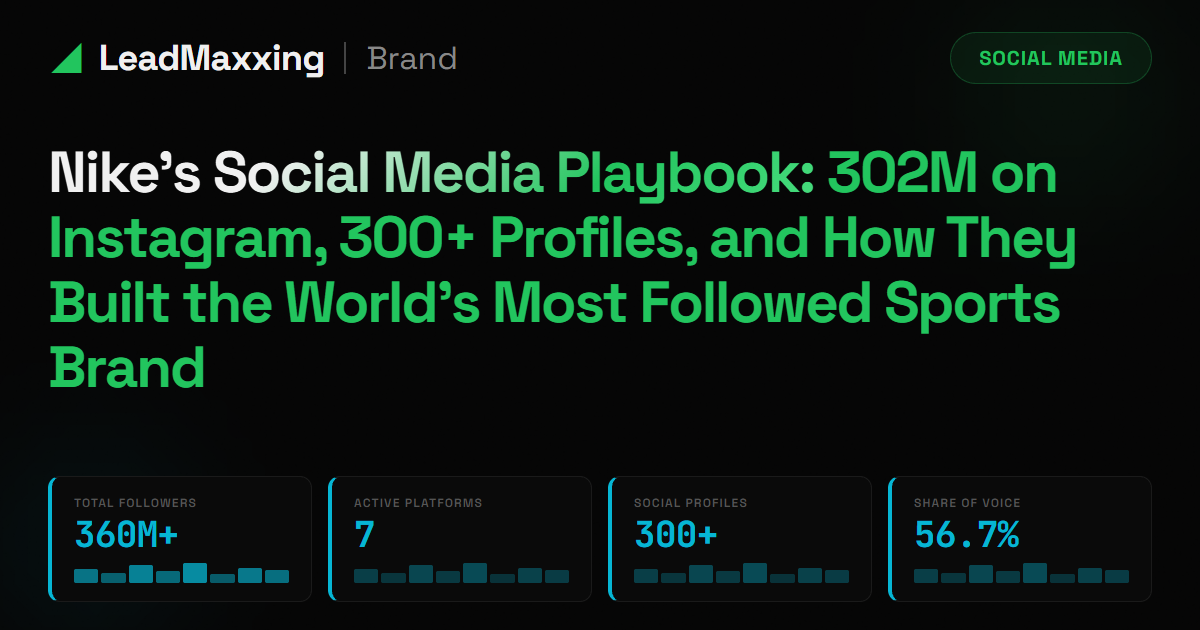
Gymshark is the most interesting competitive threat. Their entire catalog sits below Nike's entry points on most categories. A full Gymshark workout outfit costs $90–$130 — the price of a single pair of Nike's premium leggings. For Gen Z gym-goers choosing between the two, that math is hard to ignore, which is why Nike's social media strategy now heavily targets younger demographics.
Track Competitor Pricing Automatically
LeadMaxxing monitors competitor product pages, detects price changes, and alerts you when competitors adjust their strategy. The same intelligence shown above — updated daily, for your brand.
Start free →Market Positioning
Where Nike sits on the premium-to-value spectrum and why wide range is their moat
Nike occupies the unique "mass premium" position in sportswear: premium enough to command aspiration, accessible enough to drive $51 billion in annual sales. They're not a single-tier brand like Gymshark (accessible premium) or Lululemon (luxury athleisure). Nike is multi-tier by design, and that's both their greatest strength and their most complex challenge.
Source: Product page analysis of nike.com, adidas.com, lululemon.com, underarmour.com, gymshark.com. March 2026. Full outfit = leggings + sports bra + top.
The Positioning Playbook
Revenue (FY24)
Market Cap
DTC + Wholesale
Founded
Nike's brand positioning rests on four pillars:
- Innovation Premium: Carbon-plate running shoes ($250–$295) and GORE-TEX technology justify top-tier pricing. Nike spends billions on R&D — the Alphafly and Vaporfly franchises reset marathon world records and anchor premium perception.
- Cultural Relevance: Air Force 1, Dunk, and Air Max transcend sport. These lifestyle icons maintain cultural cachet across generations, supported by their earned media strategy and celebrity partnerships.
- Multi-Channel Distribution: Nike.com + Nike App + Nike Outlet + wholesale partners (Foot Locker, Dick's, JD Sports). This hybrid model gives them more pricing levers than any DTC-only competitor.
- Athlete Endorsements: From LeBron James to Serena Williams, Nike's roster of athlete ambassadors reinforces premium positioning across every sport and demographic.
Nike's pricing moat is range, not positioning. Unlike Gymshark (tight $26–$68 band) or Lululemon (consistent $88–$128 premium), Nike competes at every tier simultaneously. A $20 sports bra captures the value shopper; a $295 Alphafly captures the performance obsessive. No DTC brand can replicate this — but every DTC brand can learn from Nike's mistake of diluting premium perception through excessive discounting.
Discount Strategy
Friends & Family, Black Friday, Nike Member Days, and the pivot away from heavy discounting
Nike is actively pulling back from aggressive discounting. After years of heavy promotions that diluted brand perception and contributed to a nearly 10% revenue decline in FY2025, CEO Elliott Hill is refocusing on full-price sales and premium positioning. But Nike still runs several major sale events per year — they're just more strategic about it.
Black Friday
Friends & Family
Nike Member Days
Outlet & Clearance
Annual Discount Calendar
Nike's FY2025 results are a warning for every DTC brand: aggressive discounting destroys pricing power. Nike's digital sales dropped more than 20% in consecutive quarters after years of heavy online promotions. The lesson is clear — discounting drives short-term volume but erodes the premium positioning that justifies your prices. CEO Elliott Hill is now prioritizing brand building over promotion, supported by a refreshed email and CRM strategy focused on member engagement rather than discount codes.
The Price Increase Play
In 2025, Nike raised prices across approximately 3,300 SKUs. Footwear priced $100–$150 increased up to $5; shoes above $150 rose up to $10. Adult apparel and equipment increased $2–$10. But Nike was strategic about exemptions: all kids' products, Jordan apparel and accessories, anything under $100, and the iconic Air Force 1 Low were all held at existing prices.
This selective price increase strategy reveals Nike's thinking: push premiums where innovation and performance justify higher prices, protect accessibility on heritage icons and youth products. It's the opposite of a blanket price hike — and it's a tactic tracked through their data infrastructure to monitor consumer response in real time.
Key Findings
- → Nike generated $51.4 billion in FY2024 revenue (verified fact, Nike 10-K) before declining nearly 10% to $46.3B in FY2025, driven by over-discounting and a faltering DTC strategy
- → Nike raised prices on approximately 3,300 SKUs in 2025, with apparel rising an average of 14% and premium footwear increasing up to $10 per pair (Source: Hypebeast, CNBC)
- → Nike's apparel sits 20–40% below Lululemon and 30–80% above Gymshark across every category, occupying the "mass premium" sweet spot between luxury athleisure and accessible DTC
- → The Air Force 1 Low was specifically exempted from 2025 price increases, held at $115 to protect volume on Nike's most culturally iconic product (Source: CNBC)
- → Nike abandoned its 60% DTC target and announced a $2 billion cost-savings plan in December 2024, reinvesting in wholesale partners after digital sales dropped over 20% quarterly (Source: Retail Dive)
What This Data Means for You
Turning Nike's pricing playbook into your competitive advantage
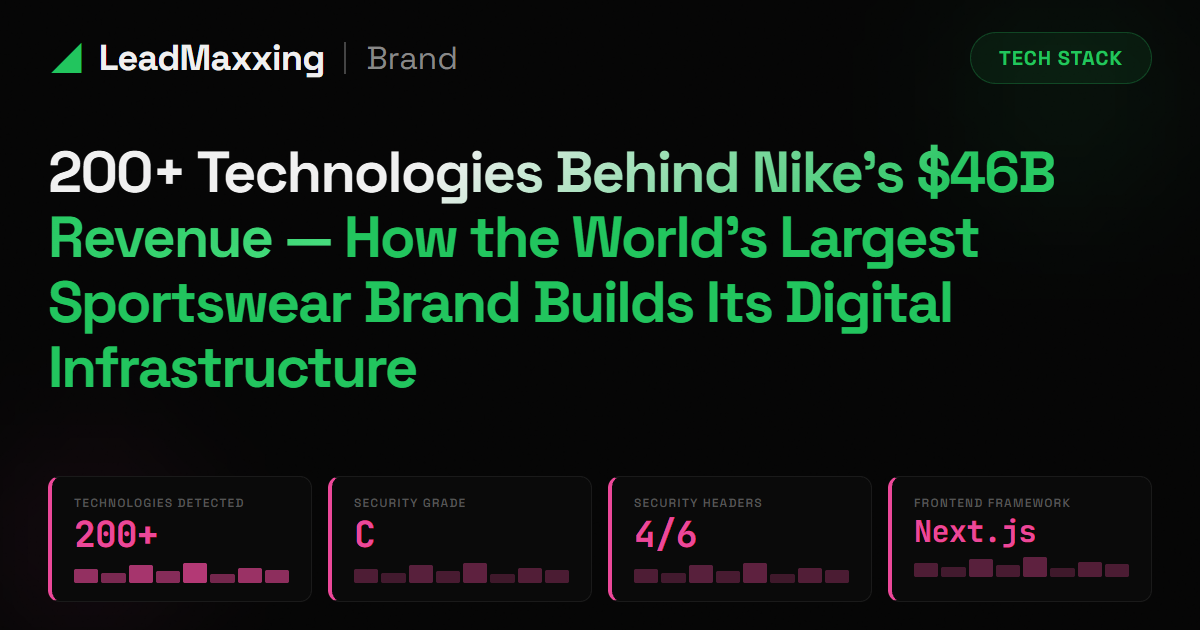
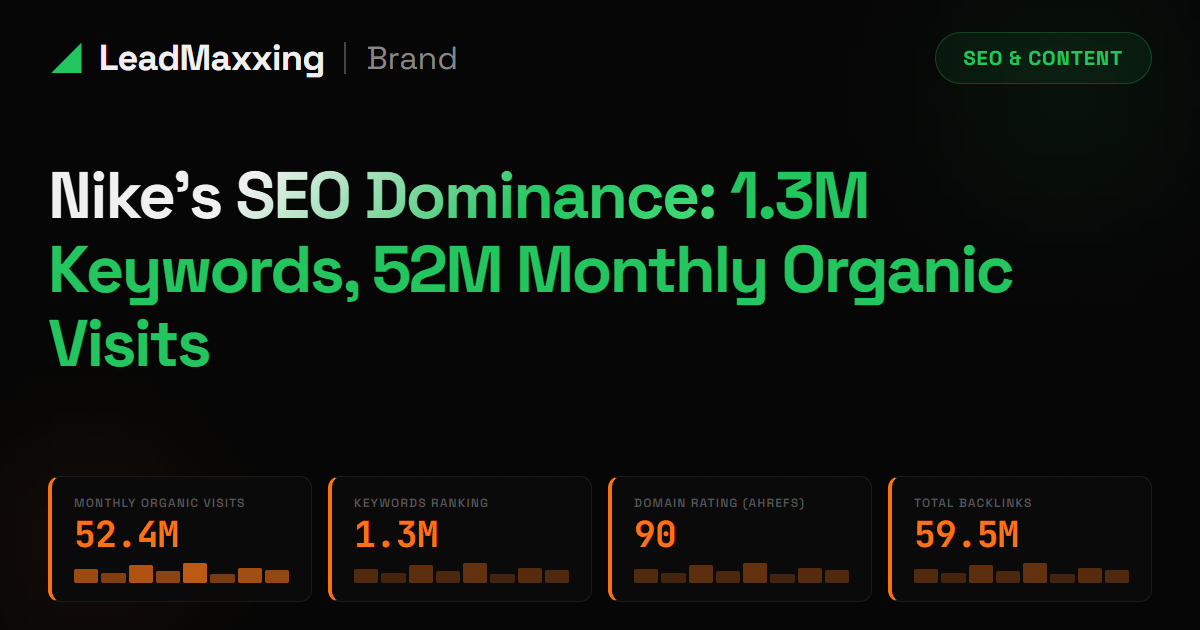
If you're a DTC brand, Nike's pricing journey is both a blueprint and a cautionary tale. Their multi-tier pricing lets them compete everywhere — but that same complexity led to over-discounting and brand dilution. The takeaway: know your pricing tier and protect it. Whether you're studying Nike's tech stack infrastructure, their SEO strategy, or their site speed architecture, the pricing data above shows exactly where opportunities exist in the competitive landscape.
LeadMaxxing Automates Competitor Price Monitoring
The pricing intelligence in this report took weeks to compile manually. LeadMaxxing scrapes competitor product pages, maps price bands, flags price changes, and benchmarks your positioning — updated weekly for your brand. Plans start at $29/month.
Try competitor price tracking →5 Things You Can Implement Today
Actionable lessons from Nike's pricing playbook
Use selective price increases, not blanket hikes
Nike raised prices on premium performance products while holding iconic heritage items steady. Apply the same logic: increase where innovation justifies it, protect accessibility on volume drivers. LeadMaxxing tracks competitor price changes so you can time your increases strategically.
Protect full-price perception over discount volume
Nike's FY2025 results prove that heavy discounting erodes brand value. Limit sales to 3–4 major events per year and make them feel like moments, not defaults. LeadMaxxing alerts you when competitors launch sale events so you can time yours strategically.
Anchor your pricing against the premium competitor
Nike positions below Lululemon ("20-40% less") not above Gymshark ("80% more"). Always benchmark upward. LeadMaxxing automates competitor price monitoring across your market so you can set the right anchor.
Build membership into your pricing architecture
Nike Member Days give exclusive access and personalized offers without public discounting. A free membership tier creates pricing flexibility without brand dilution. LeadMaxxing tracks competitor loyalty programs and member-only promotions.
Supercharge Your Leads with LeadMaxxing
Get a free LeadMaxxing account and start supercharging your leads. Start free →
Request a FREE Demo + Report
For Your Brand
Request a demo and we'll generate a full competitive analysis for YOUR brand. The same intelligence you just read — comparison with competitors, actionable strategies, and AI-powered recommendations.
More Nike Intelligence
Pricing Strategy for Similar Brands
Frequently Asked Questions
How much do Nike running shoes cost?
Is Nike more expensive than Adidas?
How does Nike's pricing compare to Lululemon?
Does Nike run sales or discounts?
What is Nike's pricing strategy?
Has Nike raised prices recently?
What is Nike's most expensive product?
How does Nike position against premium vs. budget competitors?
Sources & References
investors.nike.com
nike.com
hypebeast.com · cnbc.com
retaildive.com
stockanalysis.com · companiesmarketcap.com
couponfollow.com
adidas.com · lululemon.com · gymshark.com